
First Cold Front
Preparing a Sarasota HVAC System for Florida's First Cold Front Test Heat on a Mild Day, Then Set the Thermostat for the Swing
November afternoons around Sarasota are often still warm, but a cold front can make the same house want heat overnight. This guide covers a safe heat-pump test, thermostat settings, and the outdoor checks to do while it is still daylight.
Why This Month
A cold front is a swing, not a northern winter
NOAA's 1991–2020 normals for Sarasota-Bradenton Airport put November's average high near 80°F and the average low near 60°F. That is still a cooling climate on many afternoons. A front can drop the overnight temperature into the 50s or 40s, and occasionally lower, without turning the month into a Midwestern winter.
That swing is why HVAC prep for a Sarasota cold front is different from a furnace checklist written for Ohio. Most homes here heat with a heat pump. The same outdoor unit that cooled the house at 2 p.m. has to reverse and move heat indoors after dark. If it has not been asked to do that since last winter, a mild afternoon is the time to find out, not 10 p.m. when the front has arrived.
The same pattern shows up from Sarasota and Siesta Key out to Venice, Bradenton and Lakewood Ranch. Salt air is heavier on the islands. Inland homes more often have oak leaves and lawn clippings at the outdoor cabinet. The checks are the same.
If you have just unlocked a seasonal house, start with the snowbird HVAC checklist for Sarasota. This article is the next step: getting the system ready for the first real front, whether you were gone all summer or you live here year-round. Hosting overnight family the same week is a different job, covered in the holiday guest HVAC checklist.
Daylight Checks
Do these while the afternoon is still mild
None of these require tools beyond a flashlight. Do them before you need heat, not after the sun is down.
- Confirm the thermostat can switch to Heat, and that Emergency Heat is not already selected
- Replace a dirty filter and match the arrow to airflow
- Open supply vents and returns that were closed or blocked by furniture
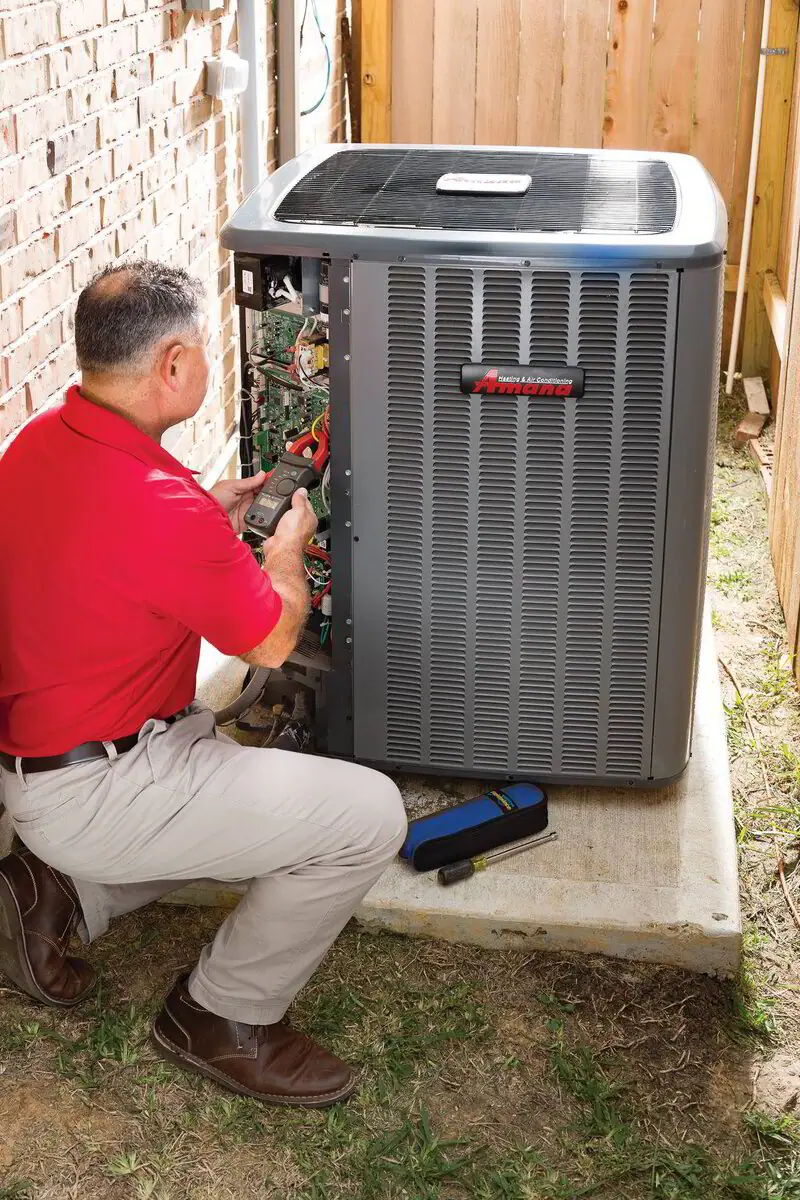
- Walk the outdoor unit: pull leaves, fronds and mulch back, and remove any cover left on after a storm
- Give the cabinet a couple of feet of open space on every side
- Look at the disconnect and the breaker so you know where they are if the unit will not start
- Plan a short heat test of 10 to 15 minutes, then switch back to Cool or Auto if the afternoon is still warm
- Note any musty, sour or burning smell in the first minute of airflow
Heat Pump Test
How to test a heat pump before the front arrives
Heat-pump supply air is warm, not scorching. People used to a northern furnace often think a working unit is broken. Give it time, and do the test in daylight.
Set the mode to Heat, not Emergency Heat
Emergency Heat, or aux heat left on as the everyday mode, runs electric strips that cost more and are meant for backup. Use Heat, or Auto if your thermostat has it, for a normal front. Our heat pump repair page covers systems that will not stay in the right mode.
Raise the setpoint only a few degrees
You are not trying to heat the whole house in fifteen minutes. You are trying to see whether the outdoor fan starts and a supply vent warms up. A small bump above the room temperature is enough.
Wait 10 to 15 minutes
The air should feel clearly warmer at a vent. Steam at the outdoor unit, with a brief cool spell indoors, can be a normal defrost cycle on a damp day. That is not the same as air that never warms.
Switch back if the afternoon is still warm
Do not leave the house in heat mode on an 80-degree afternoon after a successful test. Return to Cool or Auto so the system is ready for the next swing, the same habit described in ways to lower a Sarasota electric bill.
Stop the test if something is wrong
Turn the system off and call if the outdoor fan never starts, the air stays cold, you smell burning, the breaker trips, aux heat runs the entire time on a mild day, or ice builds on the outdoor coil and does not clear. Heating repair covers heat pumps and the fewer homes with a furnace. Gas-heat homes can also use the notes in our furnace repair guide.
Thermostat
Settings that work when the day is warm and the night is not
A front is a swing, so the useful thermostat habit is flexibility, not a single winter set point. On a typical November afternoon, many houses still want cooling. Overnight, the same house may want heat. Auto mode, if your thermostat has it and it is set up correctly, can handle that swing. If it does not, be ready to switch modes rather than leaving Emergency Heat selected "just in case."
Department of Energy cooling guidance points toward 78°F while you are home in the cooling season. For a cool night, a modest heat set point is enough. Dropping the house into the 60s and then cooling it hard the next afternoon adds run time and does not make the house safer. Big swings also make it harder to notice a real problem, because the system is already working unusually hard.
If the aux or emergency heat light stays on in mild weather, the strips are doing work the heat pump should do, and the bill will show it. That is a reason to book service, not a setting to live with through the next three fronts. A programmable or smart thermostat can hold a reasonable schedule once you know the equipment actually heats.
Outdoor Unit
Leaves, covers and salt still matter in November
Atlantic hurricane season, as dated by the National Hurricane Center, runs through November 30. Late-season debris is still part of the walk-around. Leaves, palm fronds, mulch piled against the cabinet, or a cover left on after a storm will choke the coil. The unit needs open air on every side, in heat mode as much as in cooling.
Clear debris by hand. Do not pressure-wash the fins. On Siesta Key, Longboat Key and the Venice shoreline, salt film builds on the coil through the fall. Rinsing light dust with a garden hose, with power off at the disconnect, is reasonable. Heavy salt belongs in a professional cleaning during a tune-up.
If you are coming back to a house that sat closed, watch the condensate drain when you run cooling on a warm afternoon. No drip, water in the pan, or a float switch that keeps tripping is a drain problem, not a heat problem, and it should be fixed before you rely on the system overnight. The AC leaking water guide covers that symptom, and a musty first-day smell is explained in why a Sarasota AC smells musty.
What you can handle, and what to hand to a technician
The line is the same as on a summer restart: if it is visible, dry and away from the electrical compartment, it is usually yours. Refrigerant, capacitors, a unit that will not heat, and a pan full of water are not.
| Check | Safe for you | Call a pro |
|---|---|---|
| Filter | Swap a dirty filter and note the size | Airflow is still weak with a new filter |
| Outdoor cabinet | Clear leaves and give the unit space | Fins are matted, oily, or bent flat |
| Thermostat mode | Select Heat, not Emergency Heat, for a short test | It will not change modes, or aux heat stays on in mild weather |
| Heat test | Ten to fifteen minutes on a mild afternoon | No heat, a burning smell, or a breaker that trips |
| Cover or debris | Remove a leftover storm cover and pull fronds back | The fan will not turn, or the cabinet was in standing water |
| Drain, if you also run cooling | Confirm an outdoor drip on a warm afternoon | No drip, standing water, or a float switch that keeps tripping |
Book the heat check before the first cold night
If the test looks wrong, or you want heat and the drain checked before a front arrives, schedule HVAC maintenance in Sarasota. The Reliance Comfort Promise covers same-day service for an AC failure reported before 2 p.m., or the diagnostic is free. See current specials or call (941) 417-4848. The Reliance Air Club puts the next visit on the calendar. For the rest of the year, use our Florida HVAC maintenance checklist.
Common Questions
Questions Readers Ask
When should I switch a Sarasota thermostat to heat?
Not as the everyday setting in a typical November. Afternoons are often still warm enough for cooling, with an average high near 80°F in the NOAA normals. Use Heat, or Auto if your thermostat has it, when a front is coming and you want the house warm overnight. Run a short heat test on a mild afternoon first.
My heat pump is blowing cool air. Is it broken?
Not always. Heat-pump supply air is warm rather than hot, so it can feel cool on your hand if you are used to a furnace. Wait 10 to 15 minutes. Steam at the outdoor unit can mean a defrost cycle, and indoor air may cool briefly during it. Call for repair if the air stays cold, aux heat never shuts off on a mild day, or the outdoor fan does not run.
What is the difference between Heat and Emergency Heat?
Heat lets the heat pump do the work, with backup strips only when they are needed. Emergency Heat, or aux heat left on as the everyday mode, runs those strips continuously. That can be appropriate if the heat pump has failed. It is an expensive everyday setting on a mild Gulf Coast night.
Should I cover the outdoor unit for a cold night?
No. The unit needs open air to run in heat mode. A cover left on after a storm can overheat the equipment and should be removed before you start a heat test. Clear leaves and fronds by hand, and do not pressure-wash the fins.
How soon should I schedule a tune-up if the heat test works?
If the house heats, the outdoor fan runs, and a short test on a mild afternoon looks normal, a fall tune-up within the next couple of weeks is enough. Book sooner when there is no heat, a breaker trips, aux heat stays on in mild weather, or a burning smell appears. For an AC failure, call before 2 p.m. and the Reliance Comfort Promise covers same-day service or the diagnostic is free.
Keep Exploring